DSE News Network: Music
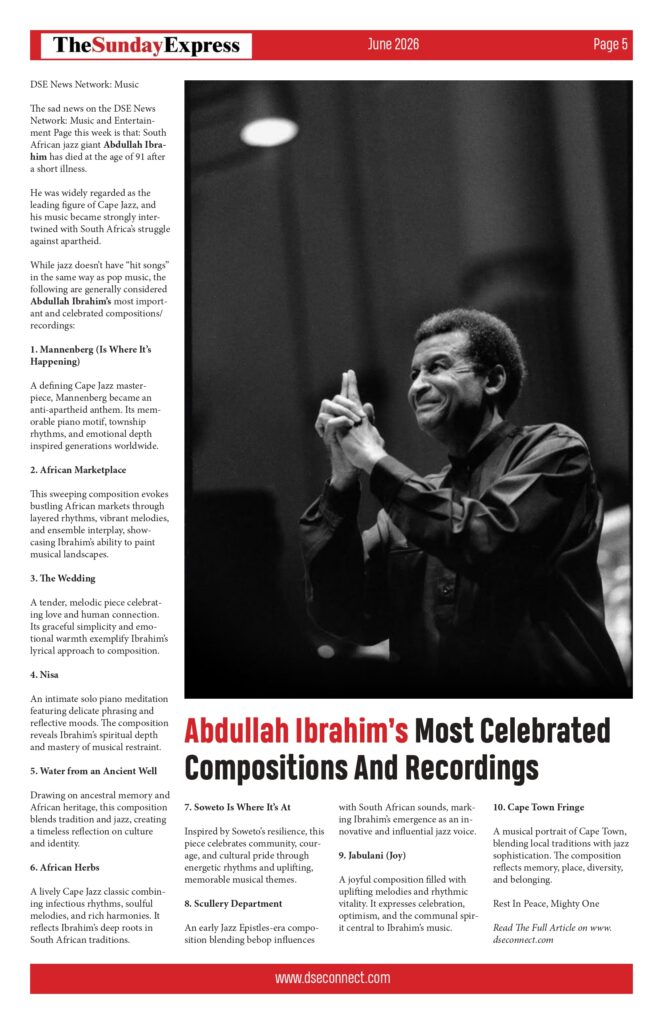
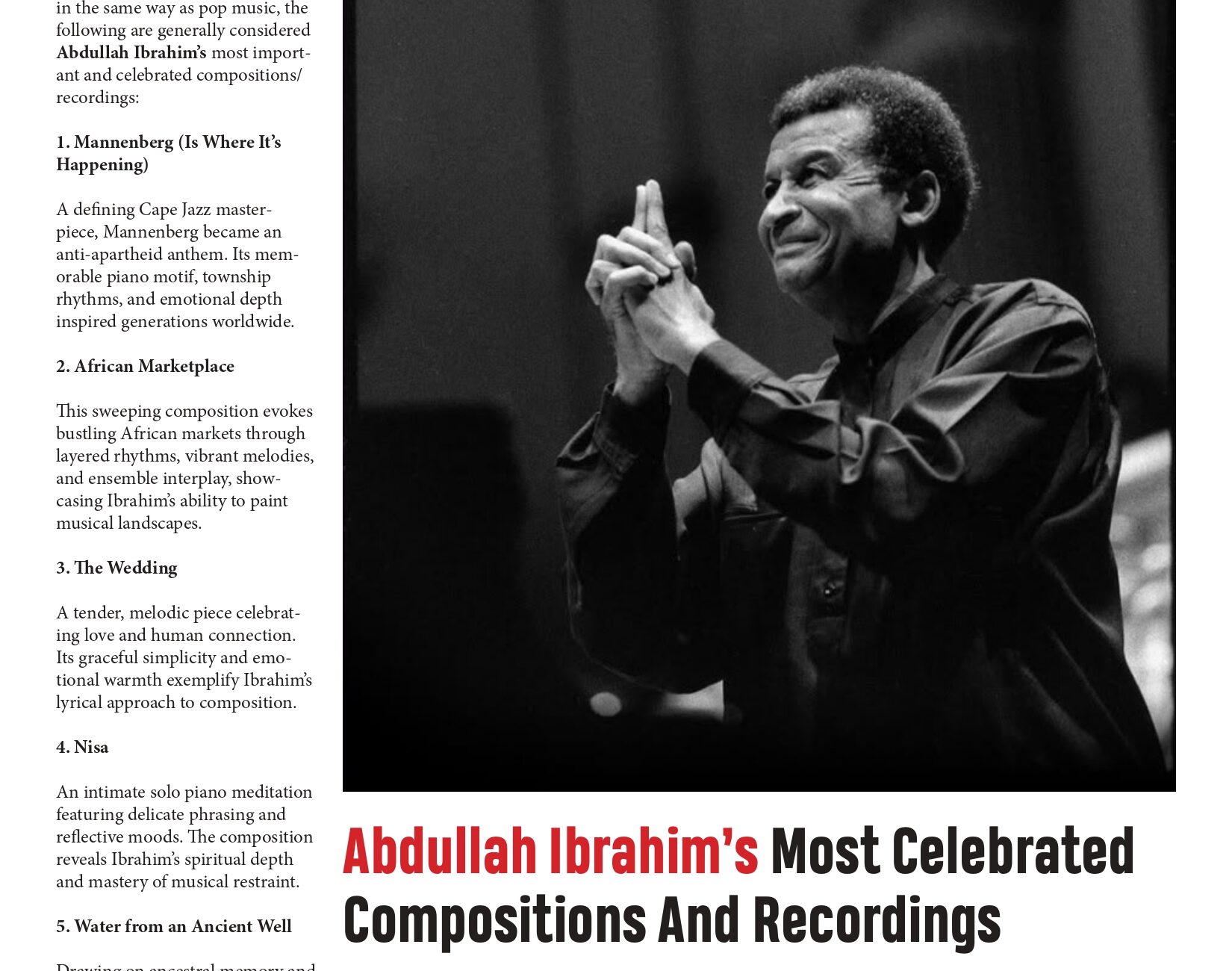
The sad news on the DSE News Network: Music and Entertainment Page this week is that: South African jazz giant Abdullah Ibrahim has died at the age of 91 after a short illness.
He was widely regarded as the leading figure of Cape Jazz, and his music became strongly intertwined with South Africa’s struggle against apartheid.
While jazz doesn’t have “hit songs” in the same way as pop music, the following are generally considered Abdullah Ibrahim’s most important and celebrated compositions/recordings:
1. Mannenberg (Is Where It’s Happening)
Perhaps Abdullah Ibrahim’s most famous composition, Mannenberg became an unofficial anthem of resistance during apartheid. Built on a hypnotic piano groove, Cape jazz rhythms, and memorable saxophone lines, it captured the spirit of working-class South African communities. Its emotional power transcended politics, becoming a symbol of hope and identity.
2. African Marketplace
This expansive composition showcases Ibrahim’s ability to blend African musical traditions with modern jazz orchestration. Rich in rhythmic movement and melodic interplay, it evokes the energy of a bustling African market. The piece highlights his gift for creating large-scale musical landscapes that feel both deeply rooted and universally accessible.
3. The Wedding
A lyrical and elegant composition, The Wedding reflects Ibrahim’s talent for expressing profound emotions through simplicity. Its graceful melody unfolds with warmth and tenderness, creating an atmosphere of celebration and reflection. The piece has become a favorite among listeners for its timeless beauty and understated sophistication.
4. Nisa
Nisa is one of Ibrahim’s most intimate solo piano works. Delicate and contemplative, it demonstrates his mastery of space, silence, and melody. The composition unfolds like a personal meditation, inviting listeners into a world of quiet introspection. Its simplicity reveals the depth of his spiritual and artistic vision.
5. Water from an Ancient Well
The title composition from one of Ibrahim’s landmark albums, this work draws on themes of memory, ancestry, and cultural continuity. Combining African rhythms with jazz improvisation, it creates a sense of timelessness. The music feels both ancient and modern, reflecting Ibrahim’s lifelong search for spiritual connection.
6. African Herbs
African Herbs is a vibrant example of Cape jazz at its most expressive. The composition combines infectious rhythms, soulful melodies, and subtle harmonic sophistication. It reflects Ibrahim’s deep connection to South African musical traditions while embracing the freedom of jazz. The result is energetic, uplifting, and richly textured.
7. Soweto Is Where It’s At
Inspired by the resilience of the people of Soweto, this composition celebrates community strength and cultural pride. The music balances joy and struggle, reflecting the realities of apartheid-era South Africa. Its rhythmic drive and memorable themes embody Ibrahim’s belief that music could inspire dignity, resistance, and unity.
8. Scullery Department
Originally associated with the pioneering Jazz Epistles era, Scullery Department captures the excitement of South Africa’s emerging modern jazz movement. The piece blends bebop influences with local musical flavors, demonstrating Ibrahim’s early creativity. It remains an important historical recording that helped shape the country’s jazz identity.
9. Jabulani (Joy)
As its title suggests, Jabulani radiates celebration and optimism. The composition features uplifting melodies, rhythmic vitality, and a sense of communal spirit. Ibrahim’s ability to transform simple themes into emotionally resonant experiences is especially evident here. The piece reflects both personal happiness and collective cultural affirmation.
10. Cape Town Fringe
Named after the city that shaped Ibrahim’s musical imagination, Cape Town Fringe captures the atmosphere and diversity of Cape Town’s communities. The composition blends jazz sophistication with local musical traditions, creating a distinctive soundscape. It serves as a musical portrait of place, memory, and belonging.
Rest In Peace, Mighty One