IOL News
Pressure is mounting ahead of the June 30 deadline set by some groups for undocumented foreign nationals to leave the country, as protests continue to spread across several provinces.
Communities have voiced frustration over jobs, housing pressures and safety concerns, with more demonstrations expected as the date draws closer.
The past week has seen marches in Tembisa, Pietermaritzburg, North West and Cape Town, with community leaders in Tembisa taking their grievances to the local police station.
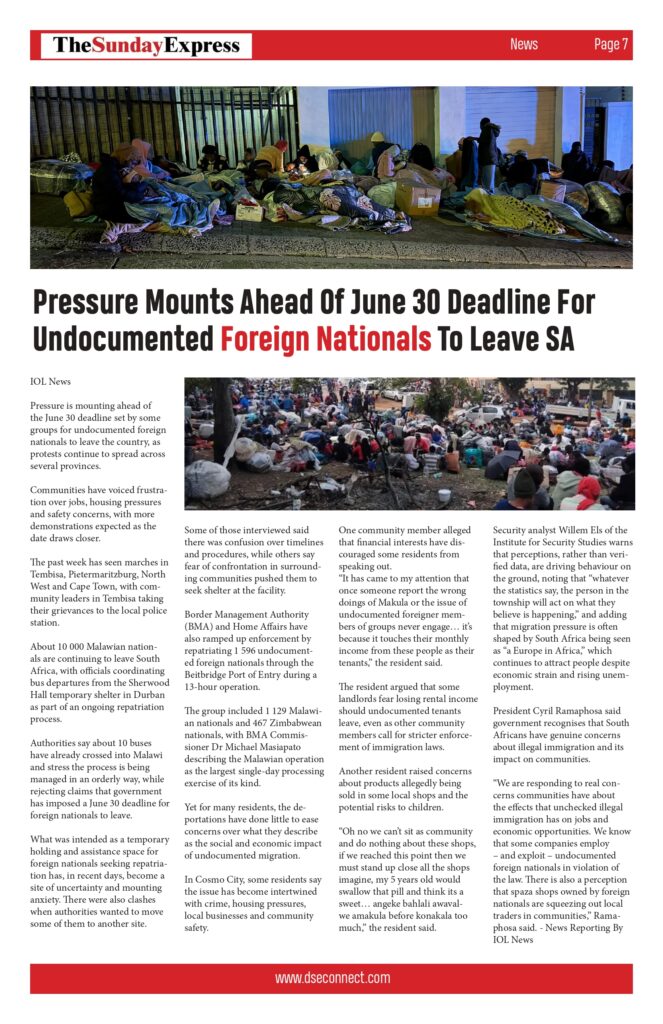
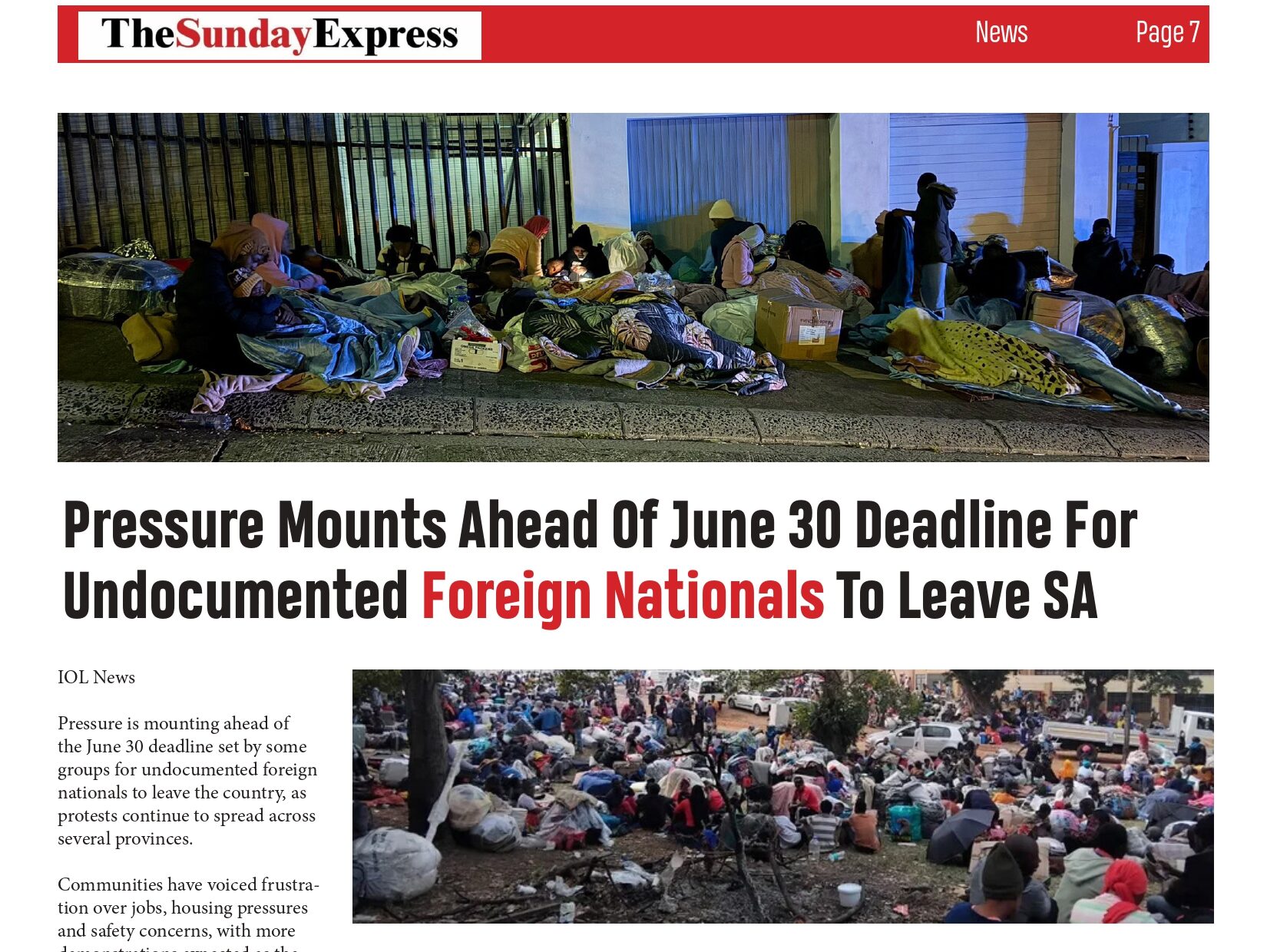
About 10 000 Malawian nationals are continuing to leave South Africa, with officials coordinating bus departures from the Sherwood Hall temporary shelter in Durban as part of an ongoing repatriation process.
Authorities say about 10 buses have already crossed into Malawi and stress the process is being managed in an orderly way, while rejecting claims that government has imposed a June 30 deadline for foreign nationals to leave.
What was intended as a temporary holding and assistance space for foreign nationals seeking repatriation has, in recent days, become a site of uncertainty and mounting anxiety. There were also clashes when authorities wanted to move some of them to another site.
Some of those interviewed said there was confusion over timelines and procedures, while others say fear of confrontation in surrounding communities pushed them to seek shelter at the facility.
Border Management Authority (BMA) and Home Affairs have also ramped up enforcement by repatriating 1 596 undocumented foreign nationals through the Beitbridge Port of Entry during a 13-hour operation.
The group included 1 129 Malawian nationals and 467 Zimbabwean nationals, with BMA Commissioner Dr Michael Masiapato describing the Malawian operation as the largest single-day processing exercise of its kind.
Yet for many residents, the deportations have done little to ease concerns over what they describe as the social and economic impact of undocumented migration.
In Cosmo City, some residents say the issue has become intertwined with crime, housing pressures, local businesses and community safety.
One community member alleged that financial interests have discouraged some residents from speaking out.
“It has came to my attention that once someone report the wrong doings of Makula or the issue of undocumented foreigner members of groups never engage… it’s because it touches their monthly income from these people as their tenants,” the resident said.
The resident argued that some landlords fear losing rental income should undocumented tenants leave, even as other community members call for stricter enforcement of immigration laws.
Another resident raised concerns about products allegedly being sold in some local shops and the potential risks to children.
“Oh no we can’t sit as community and do nothing about these shops, if we reached this point then we must stand up close all the shops imagine, my 5 years old would swallow that pill and think its a sweet… angeke bahlali awavalwe amakula before konakala too much,” the resident said.
Security analyst Willem Els of the Institute for Security Studies warns that perceptions, rather than verified data, are driving behaviour on the ground, noting that “whatever the statistics say, the person in the township will act on what they believe is happening,” and adding that migration pressure is often shaped by South Africa being seen as “a Europe in Africa,” which continues to attract people despite economic strain and rising unemployment.
President Cyril Ramaphosa said government recognises that South Africans have genuine concerns about illegal immigration and its impact on communities.
“We are responding to real concerns communities have about the effects that unchecked illegal immigration has on jobs and economic opportunities. We know that some companies employ – and exploit – undocumented foreign nationals in violation of the law. There is also a perception that spaza shops owned by foreign nationals are squeezing out local traders in communities,” Ramaphosa said. – News Reporting By IOL News