DSE News Network
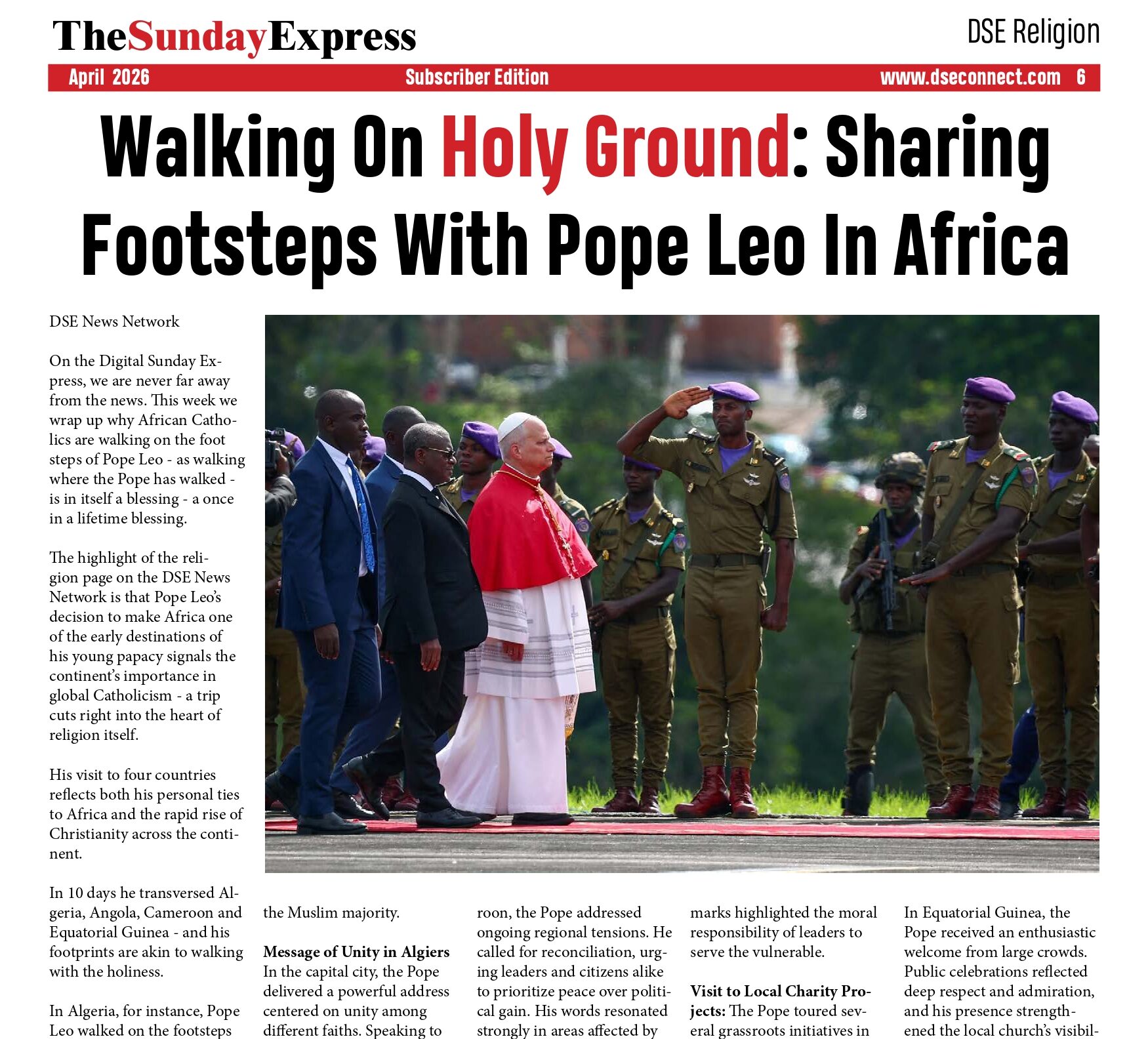
On the Digital Sunday Express, we are never far away from the news. This week we wrap up why African Catholics are walking on the foot steps of Pope Leo – as walking where the Pope has walked – is in itself a blessing – a once in a lifetime blessing.
The highlight of the religion page on the DSE News Network is that Pope Leo’s decision to make Africa one of the early destinations of his young papacy signals the continent’s importance in global Catholicism – a trip cuts right into the heart of religion itself.
His visit to four countries reflects both his personal ties to Africa and the rapid rise of Christianity across the continent.
In 10 days he transversed Algeria, Angola, Cameroon and Equatorial Guinea – and his footprints are akin to walking with the holiness.
In Algeria, for instance, Pope Leo walked on the footsteps of Augustine of Hippo (who lived around the year 400), his spiritual father, highlighting the African roots of Christianity.
Here Are The Ten Highlights from the Pope’s Africa Visit
In North Africa
The Pope’s arrival in Algeria marked a significant moment for interfaith dialogue in North Africa. Welcomed by both political leaders and religious representatives, he emphasized peace, coexistence, and mutual respect. His presence drew attention to Algeria’s small but resilient Christian community while also strengthening ties with the Muslim majority.
Message of Unity in Algiers
In the capital city, the Pope delivered a powerful address centered on unity among different faiths. Speaking to a diverse audience, he highlighted the importance of dialogue over division and encouraged young people to become ambassadors of peace in their communities.
Youth Gathering Inspires New Hope
A major highlight in Cameroon was a vibrant youth gathering that drew thousands. The Pope encouraged young Africans to embrace their potential and resist corruption and violence. His message focused on education, opportunity, and moral leadership as pillars for the continent’s future.
Call for Peace in Conflict
During his time in Cameroon, the Pope addressed ongoing regional tensions. He called for reconciliation, urging leaders and citizens alike to prioritize peace over political gain. His words resonated strongly in areas affected by unrest.
Celebration of Faith in Yaoundé
A large open-air Mass in Yaoundé became one of the most attended events of the trip. The celebration blended local culture with Catholic tradition, showcasing music, dance, and vibrant expressions of faith unique to the region.
Focus on Poverty and Inequality
In Angola, the Pope shifted attention to economic challenges. Visiting communities affected by poverty, he stressed the need for fair distribution of resources and ethical governance. His remarks highlighted the moral responsibility of leaders to serve the vulnerable.
Visit to Local Charity Projects:
The Pope toured several grassroots initiatives in Angola, including schools and healthcare centers. These visits underscored the importance of community-driven solutions and the role of faith-based organizations in addressing social needs.
Appeal for Environmental Responsibility
Environmental concerns featured prominently during the visit. The Pope spoke about the impact of climate change on African nations, urging global cooperation and local stewardship. He called for sustainable practices to protect both people and natural resources.
Warm Reception in Equatorial Guinea
In Equatorial Guinea, the Pope received an enthusiastic welcome from large crowds. Public celebrations reflected deep respect and admiration, and his presence strengthened the local church’s visibility and influence.
Closing Message of Hope and Renewal
The trip concluded with a message focused on hope, renewal, and solidarity. The Pope encouraged Africans to remain steadfast in their faith and work collectively toward a future defined by peace, justice, and opportunity. His final address left a lasting impression, reinforcing the themes that shaped the entire journey.
Together, these highlights reflect a visit that combined spiritual leadership with urgent social messages, leaving a meaningful impact across all four nations.