DSE News Network
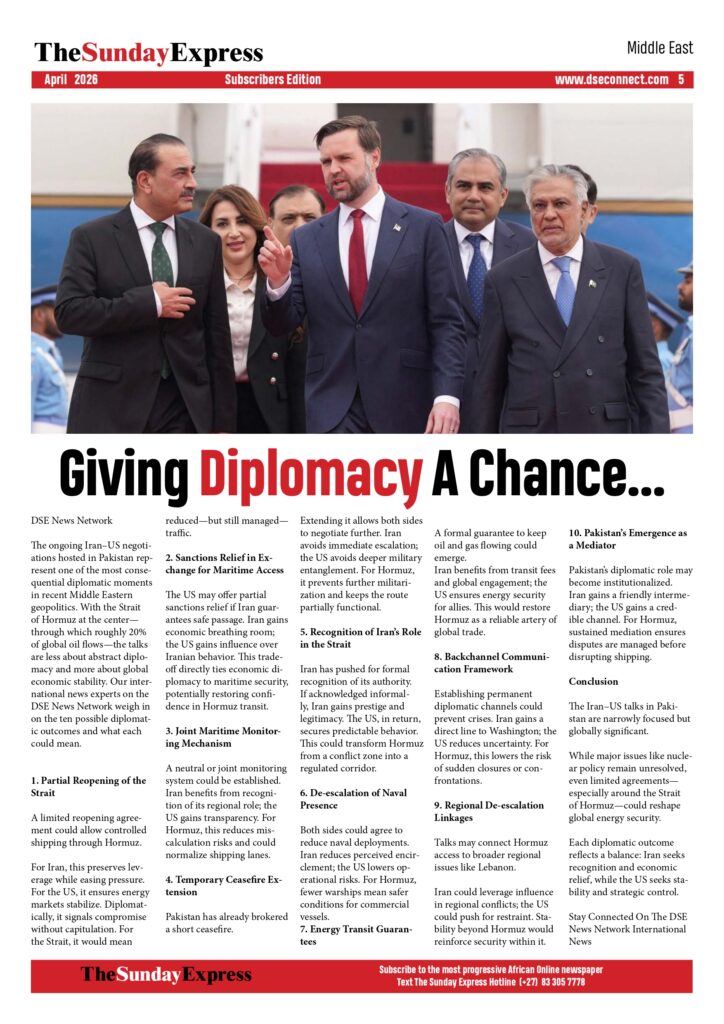
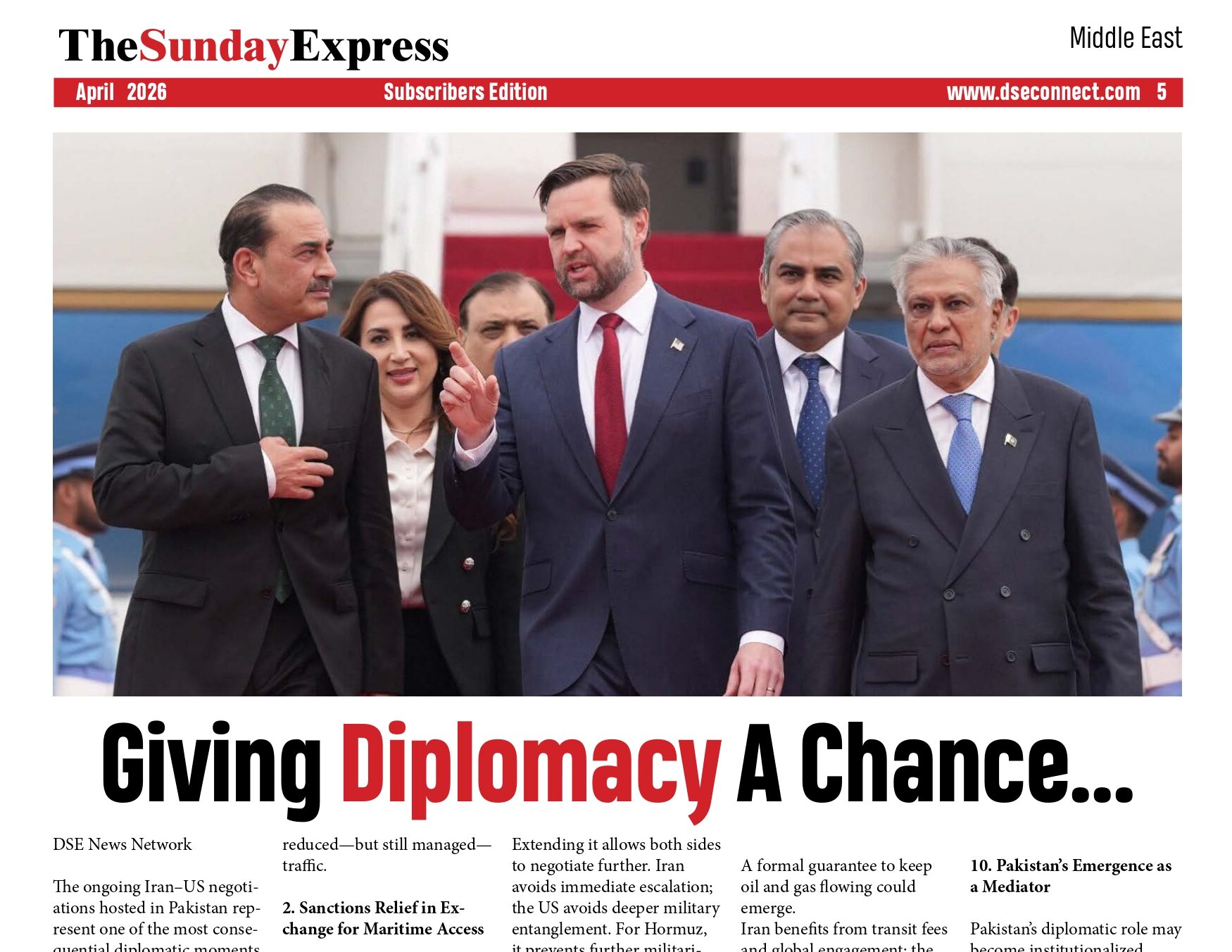
The ongoing Iran–US negotiations hosted in Pakistan represent one of the most consequential diplomatic moments in recent Middle Eastern geopolitics.
With the Strait of Hormuz at the center—through which roughly 20% of global oil flows—the talks are less about abstract diplomacy and more about global economic stability.
Our international news experts on the DSE News Network weigh in on the ten possible diplomatic outcomes and what each could mean.
- Partial Reopening of the Strait
A limited reopening agreement could allow controlled shipping through Hormuz.
For Iran, this preserves leverage while easing pressure. For the US, it ensures energy markets stabilize. Diplomatically, it signals compromise without capitulation. For the Strait, it would mean reduced—but still managed—traffic.
- Sanctions Relief in Exchange for Maritime Access
The US may offer partial sanctions relief if Iran guarantees safe passage. Iran gains economic breathing room; the US gains influence over Iranian behavior. This trade-off directly ties economic diplomacy to maritime security, potentially restoring confidence in Hormuz transit.
- Joint Maritime Monitoring Mechanism
A neutral or joint monitoring system could be established.
Iran benefits from recognition of its regional role; the US gains transparency. For Hormuz, this reduces miscalculation risks and could normalize shipping lanes.
- Temporary Ceasefire Extension
Pakistan has already brokered a short ceasefire.
Extending it allows both sides to negotiate further. Iran avoids immediate escalation; the US avoids deeper military entanglement. For Hormuz, it prevents further militarization and keeps the route partially functional.
- Recognition of Iran’s Role in the Strait
Iran has pushed for formal recognition of its authority.
If acknowledged informally, Iran gains prestige and legitimacy. The US, in return, secures predictable behavior. This could transform Hormuz from a conflict zone into a regulated corridor.
- De-escalation of Naval Presence
Both sides could agree to reduce naval deployments.
Iran reduces perceived encirclement; the US lowers operational risks. For Hormuz, fewer warships mean safer conditions for commercial vessels.
- Energy Transit Guarantees
A formal guarantee to keep oil and gas flowing could emerge.
Iran benefits from transit fees and global engagement; the US ensures energy security for allies. This would restore Hormuz as a reliable artery of global trade.
- Backchannel Communication Framework
Establishing permanent diplomatic channels could prevent crises. Iran gains a direct line to Washington; the US reduces uncertainty. For Hormuz, this lowers the risk of sudden closures or confrontations.
- Regional De-escalation Linkages
Talks may connect Hormuz access to broader regional issues like Lebanon.
Iran could leverage influence in regional conflicts; the US could push for restraint. Stability beyond Hormuz would reinforce security within it.
- Pakistan’s Emergence as a Mediator
Pakistan’s diplomatic role may become institutionalized.
Iran gains a friendly intermediary; the US gains a credible channel. For Hormuz, sustained mediation ensures disputes are managed before disrupting shipping.
Conclusion
The Iran–US talks in Pakistan are narrowly focused but globally significant.
While major issues like nuclear policy remain unresolved, even limited agreements—especially around the Strait of Hormuz—could reshape global energy security.
Each diplomatic outcome reflects a balance: Iran seeks recognition and economic relief, while the US seeks stability and strategic control.
Ultimately, the success of these talks will be measured not in sweeping agreements, but in whether ships can pass safely through one of the world’s most critical waterways.
Stay Connected On The DSE News Network International News