DSE News Network
On the DSE News Network no news passes scrutiny from our experts, writers, analysts and commentators.
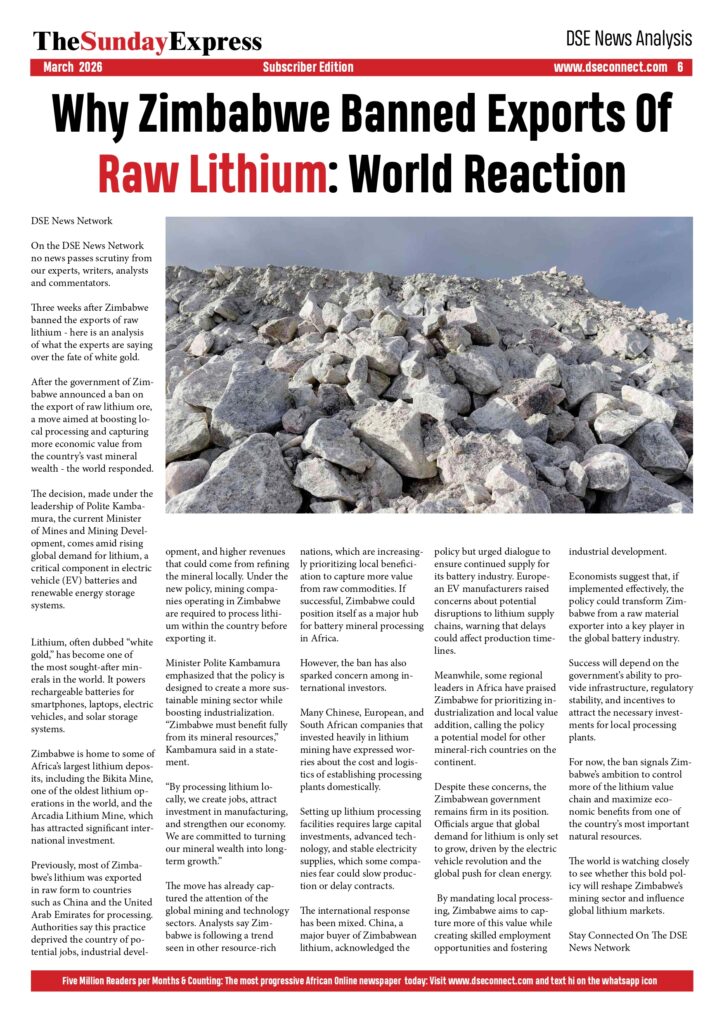
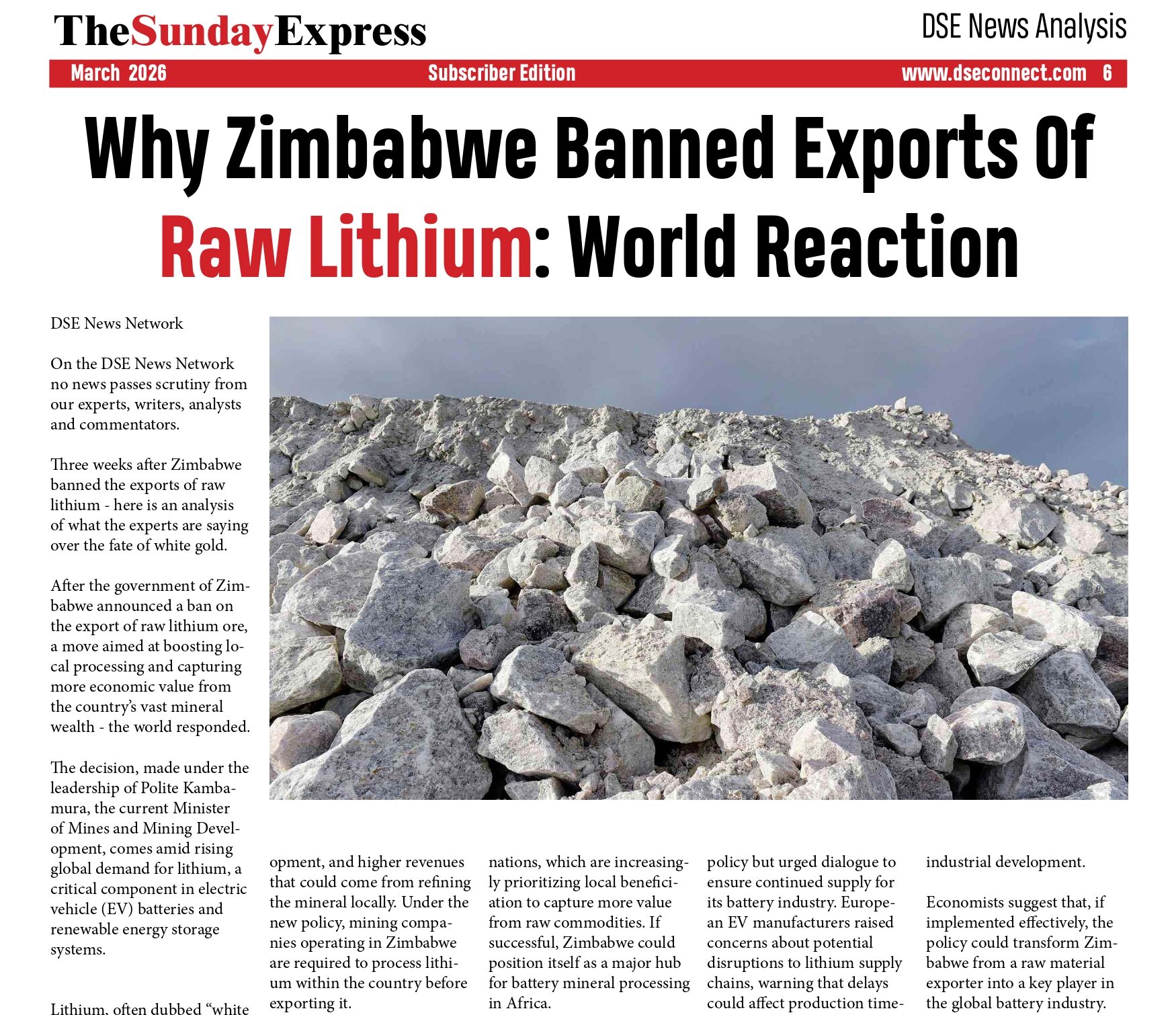
Three weeks after Zimbabwe banned the exports of raw lithium – here is an analysis of what the experts are saying over the fate of white gold.
After the government of Zimbabwe announced a ban on the export of raw lithium ore, a move aimed at boosting local processing and capturing more economic value from the country’s vast mineral wealth – the world responded.
The decision, made under the leadership of Polite Kambamura, the current Minister of Mines and Mining Development, comes amid rising global demand for lithium, a critical component in electric vehicle (EV) batteries and renewable energy storage systems.
Lithium, often dubbed “white gold,” has become one of the most sought-after minerals in the world. It powers rechargeable batteries for smartphones, laptops, electric vehicles, and solar storage systems.
Zimbabwe is home to some of Africa’s largest lithium deposits, including the Bikita Mine, one of the oldest lithium operations in the world, and the Arcadia Lithium Mine, which has attracted significant international investment.
Previously, most of Zimbabwe’s lithium was exported in raw form to countries such as China and the United Arab Emirates for processing. Authorities say this practice deprived the country of potential jobs, industrial development, and higher revenues that could come from refining the mineral locally. Under the new policy, mining companies operating in Zimbabwe are required to process lithium within the country before exporting it.
Minister Polite Kambamura emphasized that the policy is designed to create a more sustainable mining sector while boosting industrialization. “Zimbabwe must benefit fully from its mineral resources,” Kambamura said in a statement.
“By processing lithium locally, we create jobs, attract investment in manufacturing, and strengthen our economy. We are committed to turning our mineral wealth into long-term growth.”
The move has already captured the attention of the global mining and technology sectors. Analysts say Zimbabwe is following a trend seen in other resource-rich nations, which are increasingly prioritizing local beneficiation to capture more value from raw commodities. If successful, Zimbabwe could position itself as a major hub for battery mineral processing in Africa.
However, the ban has also sparked concern among international investors.
Many Chinese, European, and South African companies that invested heavily in lithium mining have expressed worries about the cost and logistics of establishing processing plants domestically.
Setting up lithium processing facilities requires large capital investments, advanced technology, and stable electricity supplies, which some companies fear could slow production or delay contracts.
The international response has been mixed. China, a major buyer of Zimbabwean lithium, acknowledged the policy but urged dialogue to ensure continued supply for its battery industry. European EV manufacturers raised concerns about potential disruptions to lithium supply chains, warning that delays could affect production timelines.
Meanwhile, some regional leaders in Africa have praised Zimbabwe for prioritizing industrialization and local value addition, calling the policy a potential model for other mineral-rich countries on the continent.
Despite these concerns, the Zimbabwean government remains firm in its position. Officials argue that global demand for lithium is only set to grow, driven by the electric vehicle revolution and the global push for clean energy.
By mandating local processing, Zimbabwe aims to capture more of this value while creating skilled employment opportunities and fostering industrial development.
Economists suggest that, if implemented effectively, the policy could transform Zimbabwe from a raw material exporter into a key player in the global battery industry.
Success will depend on the government’s ability to provide infrastructure, regulatory stability, and incentives to attract the necessary investments for local processing plants.
For now, the ban signals Zimbabwe’s ambition to control more of the lithium value chain and maximize economic benefits from one of the country’s most important natural resources.
The world is watching closely to see whether this bold policy will reshape Zimbabwe’s mining sector and influence global lithium markets.
Stay Connected On The DSE News Network