DSE News Network, and Own Correspondents
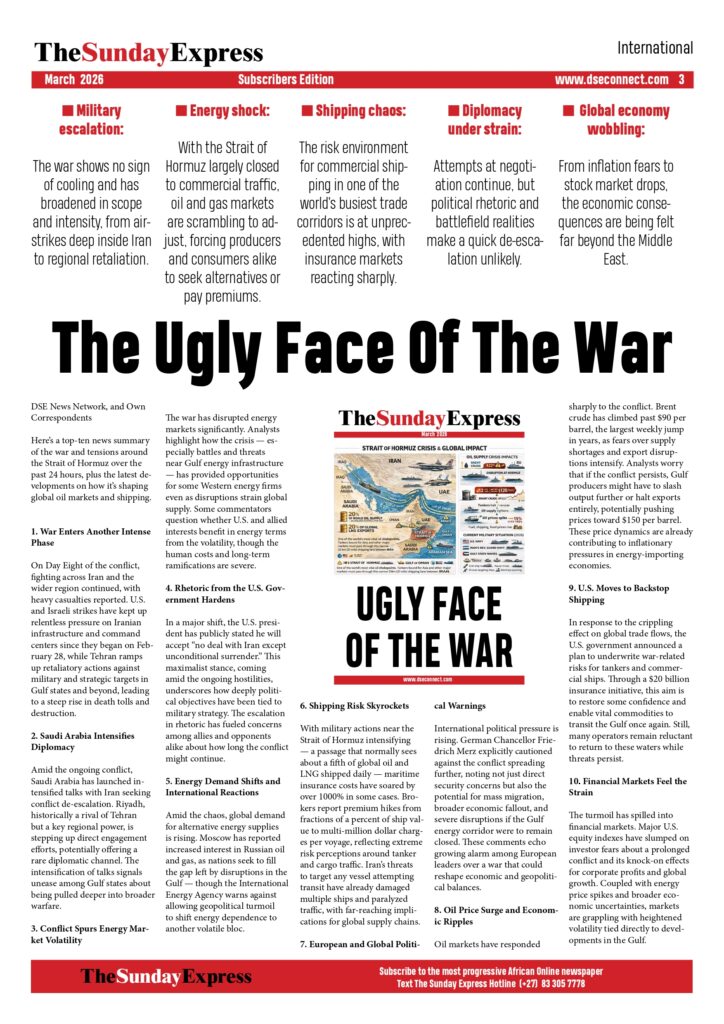
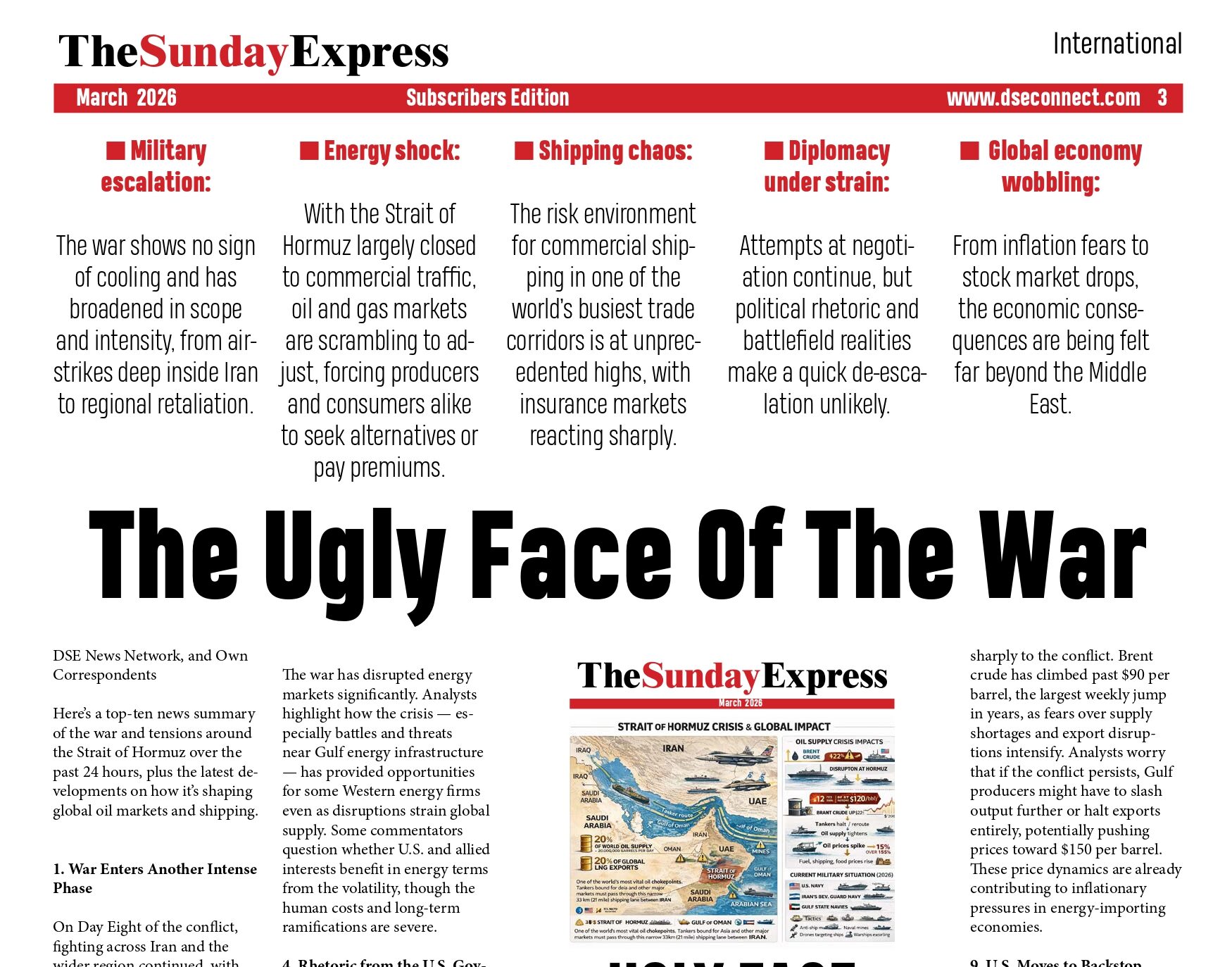
Here’s a top‑ten news summary of the war and tensions around the Strait of Hormuz over the past 24 hours, plus the latest developments on how it’s shaping global oil markets and shipping.
- War Enters Another Intense Phase
On Day Eight of the conflict, fighting across Iran and the wider region continued, with heavy casualties reported. U.S. and Israeli strikes have kept up relentless pressure on Iranian infrastructure and command centers since they began on February 28, while Tehran ramps up retaliatory actions against military and strategic targets in Gulf states and beyond, leading to a steep rise in death tolls and destruction.
- Saudi Arabia Intensifies Diplomacy
Amid the ongoing conflict, Saudi Arabia has launched intensified talks with Iran seeking conflict de‑escalation. Riyadh, historically a rival of Tehran but a key regional power, is stepping up direct engagement efforts, potentially offering a rare diplomatic channel. The intensification of talks signals unease among Gulf states about being pulled deeper into broader warfare.
- Conflict Spurs Energy Market Volatility
The war has disrupted energy markets significantly. Analysts highlight how the crisis — especially battles and threats near Gulf energy infrastructure — has provided opportunities for some Western energy firms even as disruptions strain global supply. Some commentators question whether U.S. and allied interests benefit in energy terms from the volatility, though the human costs and long‑term ramifications are severe.
- Rhetoric from the U.S. Government Hardens
In a major shift, the U.S. president has publicly stated he will accept “no deal with Iran except unconditional surrender.” This maximalist stance, coming amid the ongoing hostilities, underscores how deeply political objectives have been tied to military strategy. The escalation in rhetoric has fueled concerns among allies and opponents alike about how long the conflict might continue.
- Energy Demand Shifts and International Reactions
Amid the chaos, global demand for alternative energy supplies is rising. Moscow has reported increased interest in Russian oil and gas, as nations seek to fill the gap left by disruptions in the Gulf — though the International Energy Agency warns against allowing geopolitical turmoil to shift energy dependence to another volatile bloc.
- Shipping Risk Skyrockets
With military actions near the Strait of Hormuz intensifying — a passage that normally sees about a fifth of global oil and LNG shipped daily — maritime insurance costs have soared by over 1000% in some cases. Brokers report premium hikes from fractions of a percent of ship value to multi‑million dollar charges per voyage, reflecting extreme risk perceptions around tanker and cargo traffic. Iran’s threats to target any vessel attempting transit have already damaged multiple ships and paralyzed traffic, with far‑reaching implications for global supply chains.
- European and Global Political Warnings
International political pressure is rising. German Chancellor Friedrich Merz explicitly cautioned against the conflict spreading further, noting not just direct security concerns but also the potential for mass migration, broader economic fallout, and severe disruptions if the Gulf energy corridor were to remain closed. These comments echo growing alarm among European leaders over a war that could reshape economic and geopolitical balances.
- Oil Price Surge and Economic Ripples
Oil markets have responded sharply to the conflict. Brent crude has climbed past $90 per barrel, the largest weekly jump in years, as fears over supply shortages and export disruptions intensify. Analysts worry that if the conflict persists, Gulf producers might have to slash output further or halt exports entirely, potentially pushing prices toward $150 per barrel. These price dynamics are already contributing to inflationary pressures in energy‑importing economies.
- U.S. Moves to Backstop Shipping
In response to the crippling effect on global trade flows, the U.S. government announced a plan to underwrite war‑related risks for tankers and commercial ships. Through a $20 billion insurance initiative, this aim is to restore some confidence and enable vital commodities to transit the Gulf once again. Still, many operators remain reluctant to return to these waters while threats persist.
- Financial Markets Feel the Strain
The turmoil has spilled into financial markets. Major U.S. equity indexes have slumped on investor fears about a prolonged conflict and its knock‑on effects for corporate profits and global growth. Coupled with energy price spikes and broader economic uncertainties, markets are grappling with heightened volatility tied directly to developments in the Gulf.