By Kennedy Mapesa Mandaza
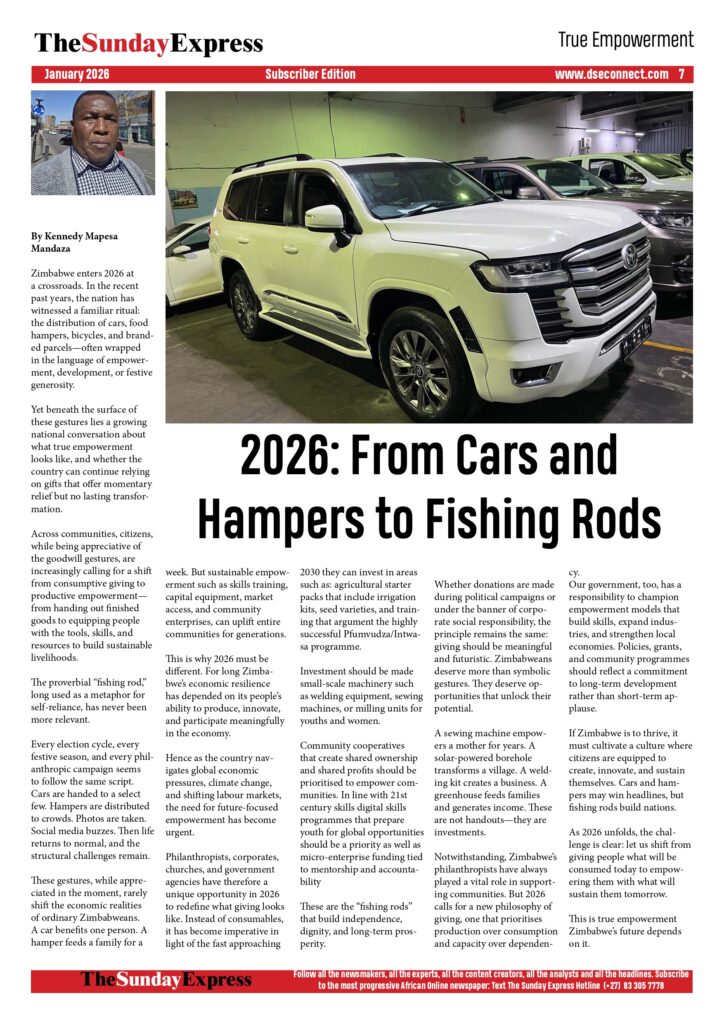
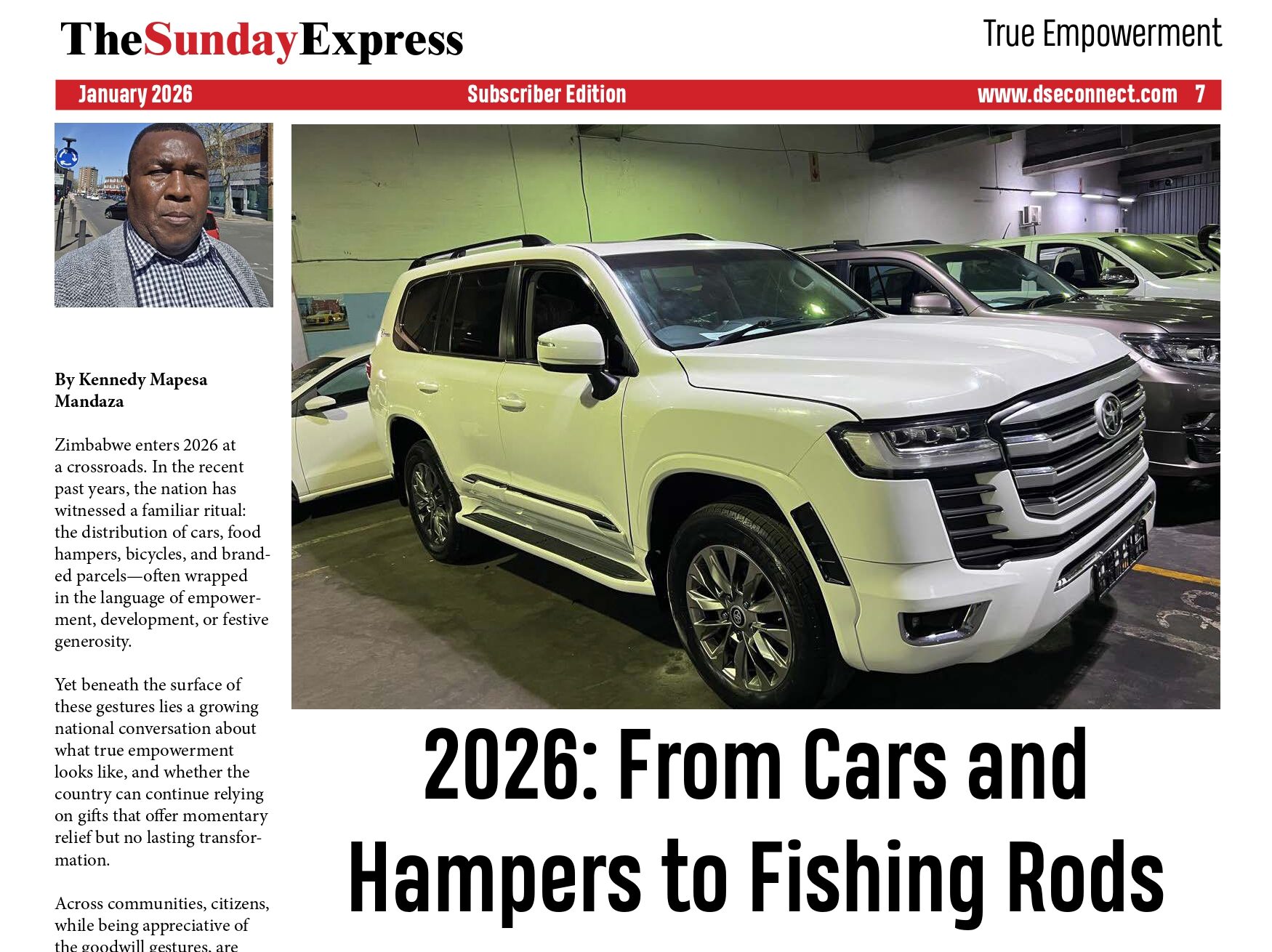
Zimbabwe enters 2026 at a crossroads. In the recent past years, the nation has witnessed a familiar ritual: the distribution of cars, food hampers, bicycles, and branded parcels—often wrapped in the language of empowerment, development, or festive generosity.
Yet beneath the surface of these gestures lies a growing national conversation about what true empowerment looks like, and whether the country can continue relying on gifts that offer momentary relief but no lasting transformation.
Across communities, citizens, while being appreciative of the goodwill gestures, are increasingly calling for a shift from consumptive giving to productive empowerment—from handing out finished goods to equipping people with the tools, skills, and resources to build sustainable livelihoods.
The proverbial “fishing rod,” long used as a metaphor for self-reliance, has never been more relevant.
Every election cycle, every festive season, and every philanthropic campaign seems to follow the same script. Cars are handed to a select few. Hampers are distributed to crowds. Photos are taken. Social media buzzes. Then life returns to normal, and the structural challenges remain.
These gestures, while appreciated in the moment, rarely shift the economic realities of ordinary Zimbabweans. A car benefits one person. A hamper feeds a family for a week. But sustainable empowerment such as skills training, capital equipment, market access, and community enterprises, can uplift entire communities for generations.
This is why 2026 must be different. For long Zimbabwe’s economic resilience has depended on its people’s ability to produce, innovate, and participate meaningfully in the economy.
Hence as the country navigates global economic pressures, climate change, and shifting labour markets, the need for future‑focused empowerment has become urgent.
Philanthropists, corporates, churches, and government agencies have therefore a unique opportunity in 2026 to redefine what giving looks like. Instead of consumables, it has become imperative in light of the fast approaching 2030 they can invest in areas such as: agricultural starter packs that include irrigation kits, seed varieties, and training that argument the highly successful Pfumvudza/Intwasa programme.
Investment should be made small‑scale machinery such as welding equipment, sewing machines, or milling units for youths and women.
Community cooperatives that create shared ownership and shared profits should be prioritised to empower communities. In line with 21st century skills digital skills programmes that prepare youth for global opportunities should be a priority as well as micro‑enterprise funding tied to mentorship and accountability
These are the “fishing rods” that build independence, dignity, and long-term prosperity.
Whether donations are made during political campaigns or under the banner of corporate social responsibility, the principle remains the same: giving should be meaningful and futuristic. Zimbabweans deserve more than symbolic gestures. They deserve opportunities that unlock their potential.
A sewing machine empowers a mother for years. A solar-powered borehole transforms a village. A welding kit creates a business. A greenhouse feeds families and generates income. These are not handouts—they are investments.
Notwithstanding, Zimbabwe’s philanthropists have always played a vital role in supporting communities. But 2026 calls for a new philosophy of giving, one that prioritises production over consumption and capacity over dependency.
Our government, too, has a responsibility to champion empowerment models that build skills, expand industries, and strengthen local economies. Policies, grants, and community programmes should reflect a commitment to long-term development rather than short-term applause.
If Zimbabwe is to thrive, it must cultivate a culture where citizens are equipped to create, innovate, and sustain themselves. Cars and hampers may win headlines, but fishing rods build nations.
As 2026 unfolds, the challenge is clear: let us shift from giving people what will be consumed today to empowering them with what will sustain them tomorrow.
This is true empowerment Zimbabwe’s future depends on it.