DSE News Network
Artificial intelligence has become one of the biggest unseen stars of the 2026 FIFA World Cup.
While fans marvel at spectacular goals and dramatic upsets, AI is quietly helping players perform better, broadcasters tell richer stories, referees make faster decisions and supporters enjoy a more personalised experience than ever before.
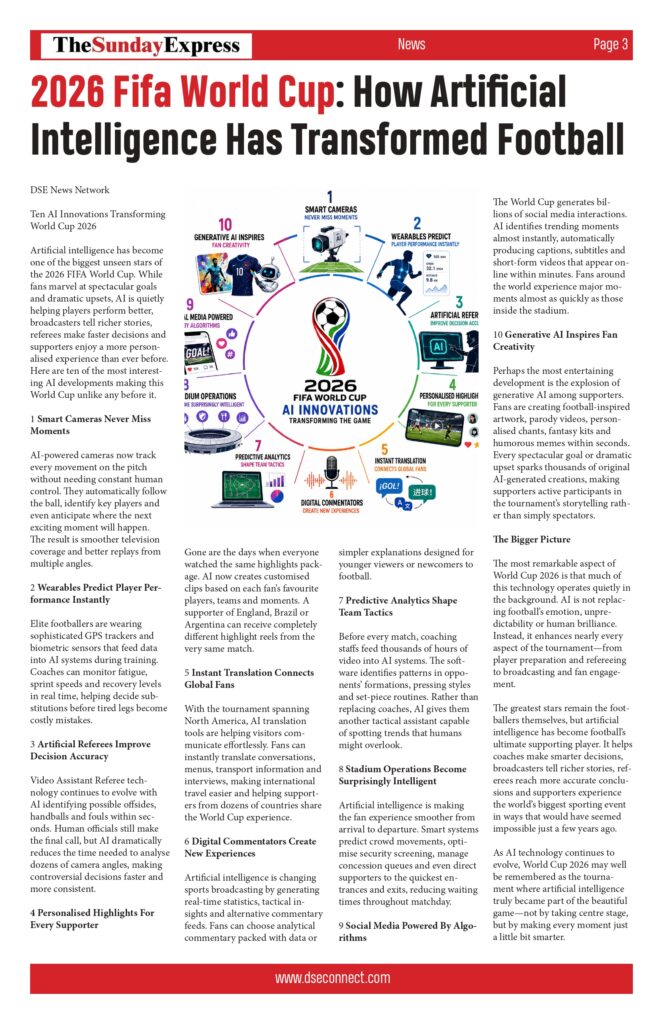
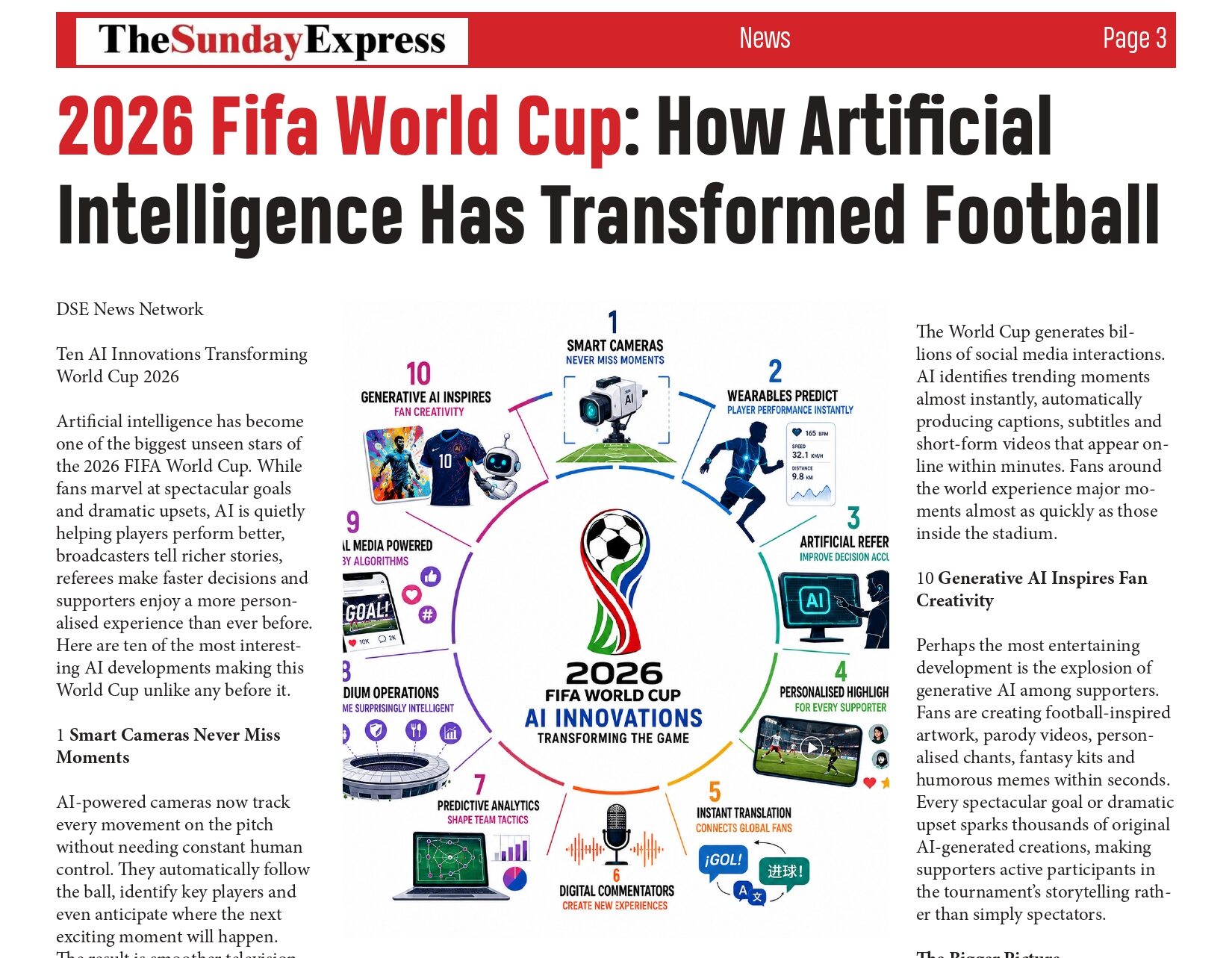
Here are ten of the most interesting AI developments making this World Cup unlike any before it.
1 Smart Cameras Never Miss Moments
AI-powered cameras now track every movement on the pitch without needing constant human control. They automatically follow the ball, identify key players and even anticipate where the next exciting moment will happen. The result is smoother television coverage and better replays from multiple angles.
2 Wearables Predict Player Performance Instantly
Elite footballers are wearing sophisticated GPS trackers and biometric sensors that feed data into AI systems during training. Coaches can monitor fatigue, sprint speeds and recovery levels in real time, helping decide substitutions before tired legs become costly mistakes.
3 Artificial Referees Improve Decision Accuracy
Video Assistant Referee technology continues to evolve with AI identifying possible offsides, handballs and fouls within seconds. Human officials still make the final call, but AI dramatically reduces the time needed to analyse dozens of camera angles, making controversial decisions faster and more consistent.
4 Personalised Highlights For Every Supporter
Gone are the days when everyone watched the same highlights package. AI now creates customised clips based on each fan’s favourite players, teams and moments. A supporter of England, Brazil or Argentina can receive completely different highlight reels from the very same match.
5 Instant Translation Connects Global Fans
With the tournament spanning North America, AI translation tools are helping visitors communicate effortlessly. Fans can instantly translate conversations, menus, transport information and interviews, making international travel easier and helping supporters from dozens of countries share the World Cup experience.
6 Digital Commentators Create New Experiences
Artificial intelligence is changing sports broadcasting by generating real-time statistics, tactical insights and alternative commentary feeds. Fans can choose analytical commentary packed with data or simpler explanations designed for younger viewers or newcomers to football.
7 Predictive Analytics Shape Team Tactics
Before every match, coaching staffs feed thousands of hours of video into AI systems. The software identifies patterns in opponents’ formations, pressing styles and set-piece routines. Rather than replacing coaches, AI gives them another tactical assistant capable of spotting trends that humans might overlook.
8 Stadium Operations Become Surprisingly Intelligent
Artificial intelligence is making the fan experience smoother from arrival to departure. Smart systems predict crowd movements, optimise security screening, manage concession queues and even direct supporters to the quickest entrances and exits, reducing waiting times throughout matchday.
9 Social Media Powered By Algorithms
The World Cup generates billions of social media interactions. AI identifies trending moments almost instantly, automatically producing captions, subtitles and short-form videos that appear online within minutes. Fans around the world experience major moments almost as quickly as those inside the stadium.
10 Generative AI Inspires Fan Creativity
Perhaps the most entertaining development is the explosion of generative AI among supporters. Fans are creating football-inspired artwork, parody videos, personalised chants, fantasy kits and humorous memes within seconds. Every spectacular goal or dramatic upset sparks thousands of original AI-generated creations, making supporters active participants in the tournament’s storytelling rather than simply spectators.
The Bigger Picture
The most remarkable aspect of World Cup 2026 is that much of this technology operates quietly in the background. AI is not replacing football’s emotion, unpredictability or human brilliance. Instead, it enhances nearly every aspect of the tournament—from player preparation and refereeing to broadcasting and fan engagement.
The greatest stars remain the footballers themselves, but artificial intelligence has become football’s ultimate supporting player. It helps coaches make smarter decisions, broadcasters tell richer stories, referees reach more accurate conclusions and supporters experience the world’s biggest sporting event in ways that would have seemed impossible just a few years ago.
As AI technology continues to evolve, World Cup 2026 may well be remembered as the tournament where artificial intelligence truly became part of the beautiful game—not by taking centre stage, but by making every moment just a little bit smarter.
Stay Connected on www.dseconnect.com