DSE Sports News
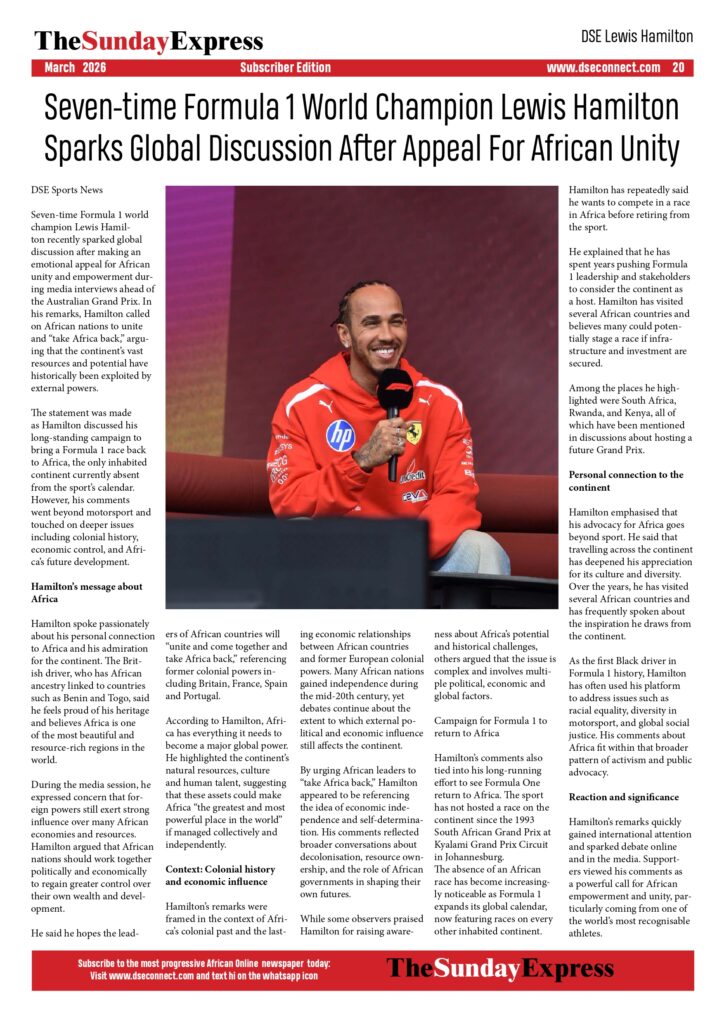
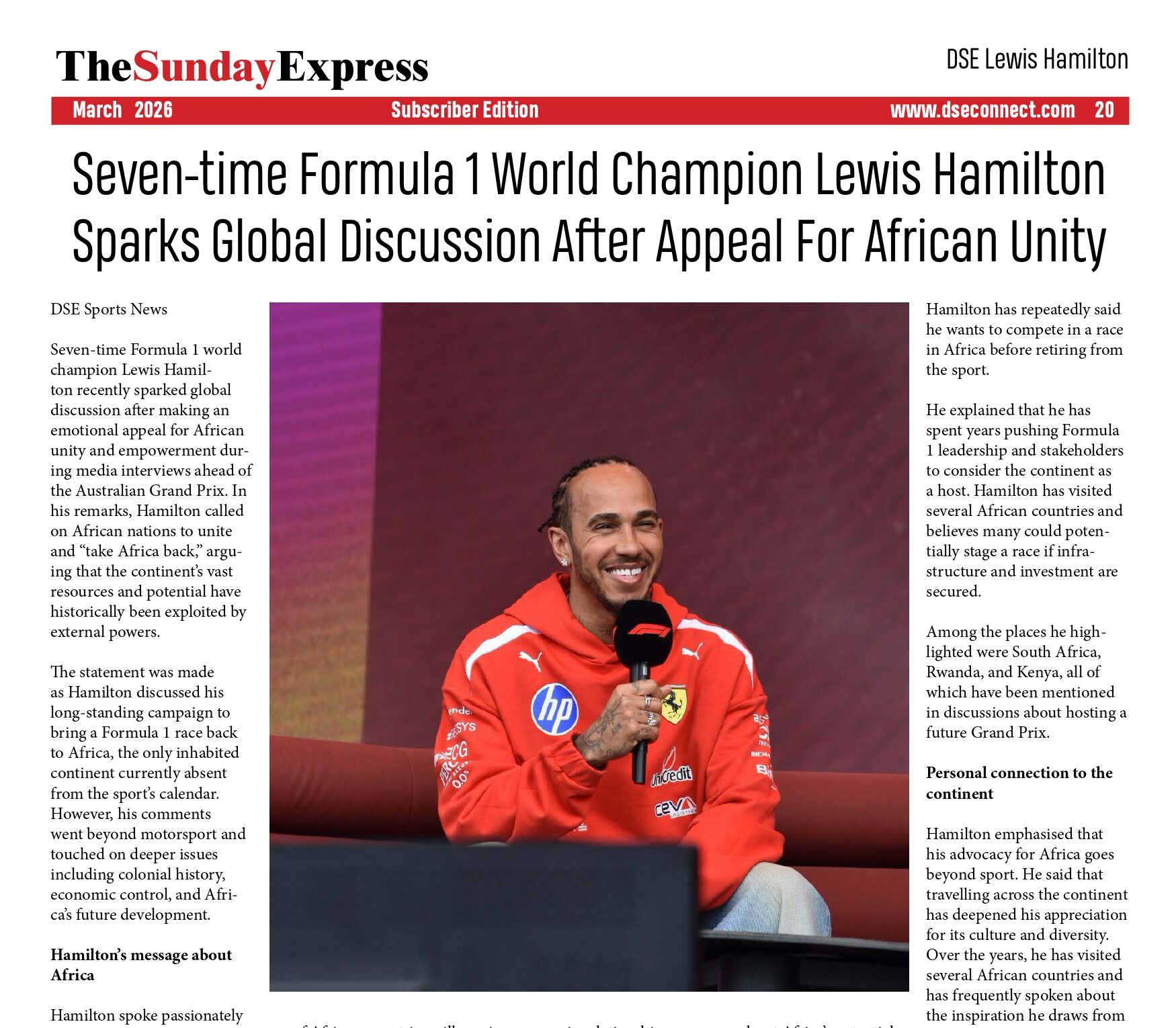
Seven-time Formula 1 world champion Lewis Hamilton recently sparked global discussion after making an emotional appeal for African unity and empowerment during media interviews ahead of the Australian Grand Prix. In his remarks, Hamilton called on African nations to unite and “take Africa back,” arguing that the continent’s vast resources and potential have historically been exploited by external powers.
The statement was made as Hamilton discussed his long-standing campaign to bring a Formula 1 race back to Africa, the only inhabited continent currently absent from the sport’s calendar. However, his comments went beyond motorsport and touched on deeper issues including colonial history, economic control, and Africa’s future development.
Hamilton’s message about Africa
Hamilton spoke passionately about his personal connection to Africa and his admiration for the continent. The British driver, who has African ancestry linked to countries such as Benin and Togo, said he feels proud of his heritage and believes Africa is one of the most beautiful and resource-rich regions in the world.
During the media session, he expressed concern that foreign powers still exert strong influence over many African economies and resources. Hamilton argued that African nations should work together politically and economically to regain greater control over their own wealth and development.
He said he hopes the leaders of African countries will “unite and come together and take Africa back,” referencing former colonial powers including Britain, France, Spain and Portugal.
According to Hamilton, Africa has everything it needs to become a major global power. He highlighted the continent’s natural resources, culture and human talent, suggesting that these assets could make Africa “the greatest and most powerful place in the world” if managed collectively and independently.
Context: Colonial history and economic influence
Hamilton’s remarks were framed in the context of Africa’s colonial past and the lasting economic relationships between African countries and former European colonial powers. Many African nations gained independence during the mid-20th century, yet debates continue about the extent to which external political and economic influence still affects the continent.
By urging African leaders to “take Africa back,” Hamilton appeared to be referencing the idea of economic independence and self-determination. His comments reflected broader conversations about decolonisation, resource ownership, and the role of African governments in shaping their own futures.
While some observers praised Hamilton for raising awareness about Africa’s potential and historical challenges, others argued that the issue is complex and involves multiple political, economic and global factors.
Campaign for Formula 1 to return to Africa
Hamilton’s comments also tied into his long-running effort to see Formula One return to Africa. The sport has not hosted a race on the continent since the 1993 South African Grand Prix at Kyalami Grand Prix Circuit in Johannesburg.
The absence of an African race has become increasingly noticeable as Formula 1 expands its global calendar, now featuring races on every other inhabited continent. Hamilton has repeatedly said he wants to compete in a race in Africa before retiring from the sport.
He explained that he has spent years pushing Formula 1 leadership and stakeholders to consider the continent as a host. Hamilton has visited several African countries and believes many could potentially stage a race if infrastructure and investment are secured.
Among the places he highlighted were South Africa, Rwanda, and Kenya, all of which have been mentioned in discussions about hosting a future Grand Prix.
Personal connection to the continent
Hamilton emphasised that his advocacy for Africa goes beyond sport. He said that travelling across the continent has deepened his appreciation for its culture and diversity. Over the years, he has visited several African countries and has frequently spoken about the inspiration he draws from the continent.
As the first Black driver in Formula 1 history, Hamilton has often used his platform to address issues such as racial equality, diversity in motorsport, and global social justice. His comments about Africa fit within that broader pattern of activism and public advocacy.
Reaction and significance
Hamilton’s remarks quickly gained international attention and sparked debate online and in the media. Supporters viewed his comments as a powerful call for African empowerment and unity, particularly coming from one of the world’s most recognisable athletes.
Critics, however, argued that the issue of foreign influence and African governance is complex and cannot be reduced to a single narrative. Nevertheless, the speech brought renewed attention to the continent’s role in global sport and the ongoing push for Formula 1 to return to African soil.
Looking ahead
Hamilton remains determined to see Formula 1 stage a race in Africa before the end of his career. He has said he intends to keep pushing for the idea and may even delay retirement until it becomes a reality.
Ultimately, his message combined sport, heritage and global politics. By urging African nations to unite and “take Africa back,” Hamilton aimed to highlight the continent’s untapped potential and encourage greater collaboration among African leaders to shape their own future.